The Mathematics of Casino Odds: How the House Always Wins

Casinos operate on a simple yet powerful principle rooted in mathematics: the house always wins. This phrase isn’t just a saying—it reflects a calculated system of probabilities, odds, and long-term statistical advantage designed to ensure that, over time, the casino consistently profits regardless of short-term outcomes. Understanding the mathematics of casino odds reveals how every game, from roulette to blackjack, operates under the laws of probability and expectation, subtly ensuring the house maintains its edge while keeping players engaged through the illusion of chance and potential reward.
The Concept of House Edge
The foundation of casino profitability is the house edge, a mathematical advantage built into every game. It represents the average percentage of each wager that the casino expects to retain over the long run. This percentage might appear small, often between 1% and 5%, but when multiplied by thousands of players and millions of bets, it guarantees substantial profit.
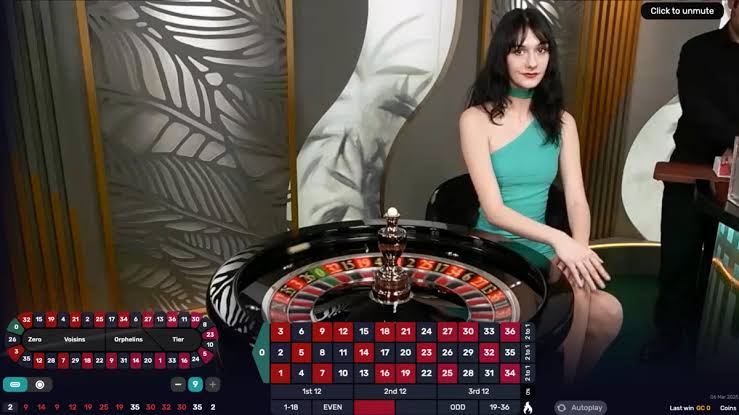
For example, in American roulette, there are 38 slots—numbers 1 through 36, plus 0 and 00. If a player bets on a single number, the payout is 35 to 1. However, the true odds of winning are 1 in 38, meaning the expected return per dollar bet is only about 94.74 cents. That 5.26-cent difference is the house edge. While a player might win occasionally, over many spins, the mathematics ensure the casino’s profitability.
Why the House Edge Matters
- It determines long-term profitability for casinos.
- It provides consistency in financial forecasting.
- It influences payout structures and game design.
- It allows casinos to operate sustainably while offering entertainment value.
Every casino game, whether skill-based or purely random, incorporates the house edge as a built-in form of insurance. This is why understanding the mathematical principles behind it is crucial for players seeking to make informed decisions.
Probability and Expected Value in Casino Games
In the world of gambling mathematics, probability and expected value (EV) are fundamental concepts. Probability measures the likelihood of a specific outcome, while expected value calculates the average amount a player can expect to win or lose per bet in the long run.
The formula for expected value is:
EV = (Probability of Winning × Amount Won per Bet) – (Probability of Losing × Amount Lost per Bet)
For example, consider a bet on red in roulette. There are 18 red numbers, 18 black numbers, and 2 green (0 and 00) numbers. The probability of winning is 18/38, and losing is 20/38. The payout is 1:1, meaning a $1 bet returns $1 profit if successful.
Using the formula:
EV = (18/38 × $1) – (20/38 × $1) = -$0.0526
This means for every dollar wagered, the player loses an average of 5.26 cents—precisely the house edge in action.
Variance and Standard Deviation: The Illusion of Luck
Casinos thrive on variance, the short-term fluctuation in results that creates the illusion of luck. While probability dictates long-term outcomes, variance ensures that players experience winning streaks, keeping them engaged and emotionally invested.
A player may win several hands of blackjack or hit a big slot jackpot, but over enough time and plays, the law of large numbers brings results back to the expected mathematical averages favoring the house. This is what creates the illusion of fairness and possibility while the underlying statistics remain unchanged.
Key Points about Variance:
- It fuels excitement and unpredictability.
- It allows some players to win big, promoting casino popularity.
- It ensures that, despite fluctuations, the house’s advantage remains intact.
Without variance, gambling would feel predictable and mechanical, reducing player interest. Casinos rely on this natural randomness to maintain entertainment value while the mathematics guarantee long-term profitability.
The Role of Game Design in Maintaining the Edge
Game designers use mathematics not only to calculate odds but also to craft engaging experiences. Each game balances risk, reward, and entertainment value while maintaining profitability. The structure of payouts, probabilities, and betting options all stem from mathematical precision.
Examples of Mathematical Game Design:
- Slot Machines: Operate based on Random Number Generators (RNGs) that simulate chance while maintaining a predetermined Return to Player (RTP). If a slot advertises a 95% RTP, it means over millions of spins, the machine returns 95% of all wagered money to players while keeping 5% for the casino.
- Blackjack: Skill-based elements such as strategy and card counting can reduce the house edge from 2% to less than 1%. However, casinos adjust rules (like restricting double downs or reshuffling frequently) to preserve their advantage.
- Craps: The variety of bets offers different edges, from under 1% for pass line bets to over 10% for proposition bets, showing how casinos balance high-risk and low-risk options to cater to different players.
Every rule, bet type, and payout ratio has been carefully calculated to ensure profitability without deterring players through excessively high odds.
The Law of Large Numbers: Predictability in the Long Run
The Law of Large Numbers is the principle that underpins the entire casino industry. It states that as the number of trials increases, the average outcome will converge on the expected value. This is why casinos are confident that, no matter how many jackpots are paid or streaks occur, the long-term results always favor them.
For instance, while a player might double their money in one night, the casino’s profits are measured across millions of spins, hands, or rolls. Over time, the small statistical advantages embedded in each game ensure consistent revenue.
Psychological Reinforcement and Mathematical Design
Beyond raw probability, casinos use psychological and behavioral design rooted in mathematics to influence player decisions. These mechanisms include:
- Near Misses: Slot machines often display near-win combinations that trigger dopamine responses, encouraging continued play.
- Variable Rewards: Unpredictable payouts keep players engaged longer, a principle derived from behavioral psychology.
- Low Denomination Bets: Small bet sizes lower perceived risk, allowing more wagers and maximizing the effect of the house edge over time.
By combining psychological triggers with precise mathematical design, casinos ensure prolonged engagement while maintaining their advantage.
Risk Management and Casino Operations
Casinos are not just entertainment venues; they are finely tuned risk management systems. Mathematicians, often called gaming analysts, continuously monitor odds, payouts, and player data to maintain balance.
Their responsibilities include:
- Ensuring games comply with probability standards.
- Monitoring payout percentages for consistency.
- Detecting anomalies that could indicate advantage play or system flaws.
- Optimizing promotions to encourage profitable play without compromising the house edge.
This meticulous control ensures that the casino remains financially stable while offering games that appear fair and enticing.
Real-Life Examples of Mathematical Advantage
- Roulette: With a 5.26% house edge, an average of $5.26 per $100 wagered stays with the casino. Multiply this by thousands of players daily, and the result is guaranteed revenue.
- Blackjack: Even with optimal strategy, the house retains an edge of around 0.5% due to rule variations. Over thousands of hands, this margin generates steady profit.
- Craps: Bets with low odds attract experienced players, but high-risk bets appeal to casual gamblers, balancing both entertainment and profitability.
- Slots: Often programmed with RTPs between 90% and 97%, slot machines ensure constant returns through sheer volume of play.
These examples illustrate that no matter the short-term fluctuations, the casino’s mathematical design ensures consistent success.
The Player’s Perspective: Managing Risk and Expectation
Understanding the mathematics of casino odds empowers players to make informed decisions. While the house advantage cannot be eliminated, strategic play can minimize losses and extend entertainment value.
Smart Player Strategies:
- Choose games with the lowest house edge, such as blackjack or baccarat.
- Learn optimal strategies for skill-based games to reduce disadvantage.
- Set strict time and money limits before playing.
- Avoid side bets and high-volatility wagers that increase losses over time.
Awareness of mathematical principles allows players to view gambling as entertainment rather than a means of profit, leading to more responsible and enjoyable experiences.
The Role of Regulation and Fair Play
Regulatory authorities ensure casino games operate within mathematical fairness parameters. Auditors regularly test RNGs, payout ratios, and house edge consistency to maintain integrity. Transparent disclosure of odds and RTP percentages ensures players understand the probabilities before wagering.
Casinos that operate under strict regulation maintain trust and credibility, reinforcing the principle that while the house always wins statistically, the games remain fair and unbiased.
The Unchanging Truth Behind Casino Mathematics
Mathematics ensures that every spin, shuffle, or roll is a part of a larger predictable system. Casinos may appear to operate on luck, but beneath the surface lies a foundation of statistical certainty. Every payout structure, rule adjustment, and game mechanism serves the purpose of reinforcing the house edge over time.
The genius of casino mathematics is that it transforms random chance into structured profit. Players may win in the short term, but probability and expected value ensure the house remains profitable in the long run.
FAQs
Why does the house always win?
Because every casino game has a built-in statistical advantage ensuring long-term profitability. The house edge, even when small, guarantees consistent profit over many bets.
Can a player beat the house using skill?
In some games like blackjack or poker, skill can reduce the edge but not eliminate it. Over time, probability still favors the house.
Which games have the lowest house edge?
Games like blackjack, baccarat, and certain craps bets offer the lowest house edges, often below 1% when played optimally.
What is the difference between RTP and house edge?
RTP (Return to Player) indicates the percentage of total bets returned to players, while the house edge is the percentage the casino retains. If a game has a 96% RTP, the house edge is 4%.
How do casinos ensure randomness in games?
Casinos use Random Number Generators (RNGs) and regular audits by independent agencies to guarantee fair outcomes consistent with mathematical probabilities.
The mathematics of casino odds: how the house always wins is not about deception but design. By blending probability, psychology, and game theory, casinos create experiences that feel unpredictable yet always lead to the same outcome—the steady, calculated advantage of the house.