Archive

June 2026

Browsing
Card games have brought people together for centuries, offering an inexpensive yet intellectually stimulating form of entertainment. While many casual pastimes rely entirely on the luck of the draw, strategy-based card games reward foresight, analytical thinking, memory, and psychological calculation. In a strategic card game, the cards dealt to your hand represent mere raw materials; your decisions dictate whether those resources translate into victory or defeat.
Stepping into the realm of strategic card gaming can feel intimidating for newcomers. Complex terminology, dense rulebooks, and veteran players who calculate probabilities in seconds often discourage novices before they play their first turn. Fortunately, several exceptional games offer the perfect balance: accessible rules that can be learned in fifteen minutes, paired with deep tactical gameplay that remains engaging for a lifetime.
Whether you want to play with a standard fifty-two-card deck or dive into modern hobby releases, starting with the right game builds core strategic habits that carry over to almost every tabletop challenge.

Core Mechanics Behind Strategic Card Play

To understand why certain games suit beginners, it helps to identify the fundamental mechanics that define strategy games. Unlike pure chance games such as War or standard Casino, strategic card games demand active resource management.
Mastering these basic mechanics creates a toolkit for learning more complex games in the future:
  • Trick-Taking: Players play one card per round from their hands, with the highest card or designated trump suit capturing the trick. Success requires tracking which suits opponents hold and planning several turns ahead.
  • Set Collection: The goal centers on accumulating specific combinations, suits, or sequences of cards to score points or clear your board, demanding hand management and probability evaluation.
  • Hand Management and Tempo: Deciding not just what to play, but when to play it. Conserving powerful cards for pivotal moments while forcing opponents to waste their assets is the essence of card control.
  • Information Asymmetry and Deductive Reasoning: Working with imperfect knowledge. You must read discards, table actions, and play timing to deduce what cards remain hidden in your opponents hands.
Beginning with games that isolate and showcase these mechanics in an approachable way allows you to build tactical intuition without becoming overwhelmed by rule exceptions.

Rummy: The Quintessential Set-Collection Gateway

Rummy stands as one of the most popular card games in history, and for good reason. It teaches the fundamentals of set collection, risk calculation, and board awareness using an ordinary deck of cards.
The primary objective in standard Gin Rummy or traditional Straight Rummy is to organize your hand into valid melds:
  • Sets or Groups: Three or four cards sharing the same numerical rank, such as three kings or three sevens.
  • Runs or Sequences: Three or more consecutive cards belonging to the exact same suit, like the four, five, and six of spades.
What makes Rummy strategically compelling for beginners is the dynamic discard pile. Every time an opponent draws from the discard pile, they reveal a piece of their hand to the table. If a player grabs an eight of hearts, everyone knows they are likely building a run in hearts or collecting eights.
Beginners quickly learn defensive play: holding onto a dead card simply because discarding it would feed the next player a winning hand. Rummy forces you to balance your offensive goal of forming combinations against your defensive obligation to starve your opponents of the resources they need.

Spades: Mastering Partnership and Trick-Taking

Trick-taking games represent a massive branch of traditional card play, and Spades is widely considered the ideal gateway to this genre. Unlike games where trump suits rotate or depend on bidding auctions, Spades keeps the rules simple: spades are permanently the highest, most powerful trump suit in the game.
Typically played in fixed partnerships of two against two, Spades introduces two essential strategic concepts:
  • Accurate Bidding: Before the first card is led, each player estimates the exact number of tricks they expect their hand to win. Overbidding results in severe point penalties, while underbidding can yield sandbag penalty points that punish conservative play. Beginners learn to evaluate hand strength accurately rather than wishfully.
  • Trump Management and Timing: Spades cannot be played until the suit has been broken, meaning someone with no cards in the led suit plays a spade. Deciding when to cut an opponent’s high card with a small spade, or when to deliberately lead spades to bleed the table of trumps, provides a masterclass in hand control.
Because you play with a partner without verbal communication, Spades trains players to read non-verbal gameplay cues. Tracking which partner holds control of a suit turns the game into a satisfying exercise in teamwork and shared strategy.

Cribbage: The Classic Balance of Pegging and Math

Cribbage is an ancient English card game that utilizes a standard fifty-two-card deck alongside an iconic wooden board with pegs to track scoring. Although the scoring rules appear unusual at first glance, Cribbage is one of the finest strategy games for developing tactical counting and card disposal skills.
A game of Cribbage revolves around distinct phases that each require specific calculations:
  • The Discard Dilemma: Each player receives six cards and must discard two into the crib, a secondary scoring hand that belongs alternately to the dealer. Deciding which two cards to give away is the core strategic puzzle. If it is your crib, you want to seed it with synergistic pairs or runs; if it is your opponent’s crib, you must throw uncoordinated cards that will not give away free points.
  • The Pegging Play: Players take turns playing cards in a sequence, keeping a cumulative running total up to thirty-one. Points are scored during play by hitting exact milestones like fifteen, thirty-one, playing identical pairs, or creating short sequential runs.
  • The Final Count: Players score their remaining four cards along with a shared community starter card, counting combinations that sum to fifteen, pairs, flushes, and runs.
Cribbage teaches beginners how to calculate compound probabilities and manage tactical tradeoffs. Its low-variance structure means that while luck plays a role on individual hands, the superior strategist consistently emerges victorious over a full match.

Sushi Go!: Modern Drafting and Rapid Adaptation

For beginners interested in modern hobby games rather than traditional playing card decks, Sushi Go! offers an ideal entry point. It uses the pick-and-pass drafting mechanic popularized by complex tabletop classics, but streamlines the experience into a fast, twenty-minute game suitable for all ages.
The strategic loop of Sushi Go! is immediate and intuitive:
  • Simultaneous Drafting: Every player receives a hand of cards, selects one card to keep face down on the table, and passes the remaining hand to the player on their left. Everyone reveals their chosen card simultaneously.
  • Diverse Scoring Synergies: Different types of sushi cards score through unique mechanics. Tempura pays points only in matching pairs, sashimi rewards large sets of three, dumplings scale exponentially the more you collect, and wasabi triples the point value of the next nigiri card played on top of it.
  • Long-Term Pudding Investments: Pudding cards score zero points during immediate rounds, but the player with the most puddings at the end of the entire three-round match earns a massive six-point bonus, while the player with the fewest loses six points.
Sushi Go! teaches beginners how to track moving card pools. Because hands are passed around the table, you know what cards are circulating. If you see two sashimi cards pass through your fingers and notice an opponent collecting them, you must decide whether to hate-draft the third card to deny them points, or focus on scoring your own sets.

Dominion: The Gateway to Deck-Building Strategy

Deck-building is one of the most popular genres in contemporary board and card gaming, and Dominion is the legendary title that created the category. It offers beginners an accessible introduction to engine-building mechanics, where players design and refine their own deck of cards over the course of the match.
Dominion provides an exceptional strategic learning curve:
  • Identical Starting Baselines: Every player begins the game with the exact same humble ten-card deck: seven copper coins and three basic victory point estates.
  • The Shared Supply Market: Ten action card kingdom piles are laid out in the center of the table, available for any player to purchase using the coins drawn from their deck each turn.
  • Purchasing Engine Synergies: Cards like Village allow you to take extra actions, cards like Smithy allow you to draw extra cards, and cards like Chapel let you trash weak starter cards permanently from your deck to increase efficiency.
  • The Victory Card Dilemma: To win Dominion, you must purchase victory point cards like Provinces. However, victory cards serve zero functional purpose during play; they generate no coins and grant no actions. Every victory card you buy dilutes your deck, slowing down your engine. Deciding the precise turn to stop buying economic infrastructure and start buying victory points is the central strategic question.
Dominion has zero hidden cards; all market cards are visible to everyone from the start. This open-information structure lets novices analyze what their opponents are doing and learn effective combinations through direct observation.

Actionable Strategy Tips for Card Game Beginners

Regardless of which game you sit down to play, adopting a strategic mindset accelerates your improvement:
  • Track the Discards: Pay constant attention to cards that have already left the game. In a standard deck, knowing that three kings have already fallen means the fourth king poses zero threat to your hand.
  • Do Not Fixate Exclusively on Offense: Beginner players often focus entirely on their own board while ignoring what their opponents are building. Defensive denial is often twice as valuable as personal scoring.
  • Accept Natural Variance: Every card game involves elements of luck in the shuffle. A sound strategic decision can still result in a lost round due to an unlucky draw. Focus on making mathematically correct choices over hundreds of hands rather than reacting emotionally to a single bad result.
  • Plan One Turn Further Ahead: When it is not your turn, do not daydream. Use downtime to calculate your next two potential plays based on what cards opponents might reveal.

Frequently Asked Questions

What is the easiest strategy card game to teach someone who has never played modern tabletop games?
Sushi Go! is widely considered the easiest strategic card game to teach a complete beginner. Because turns happen simultaneously, there is zero waiting time between player actions, which keeps engagement high. The charming visual theme and simple iconography make card values easy to understand, and the pick-and-pass drafting mechanic can be grasped in under three minutes without needing complex setup.
Why is Spades generally recommended for beginners over Bridge or Hearts?
Spades is far more accessible than Bridge because it features fixed partnerships and a permanent, unchanging trump suit (spades), eliminating the complex, coded bidding conventions that make Bridge intimidating for newcomers. Compared to Hearts, which involves trick avoidance and shoot-the-moon calculations that can confuse beginners, Spades has straightforward goals: estimate how many tricks you can take and execute your plan alongside your partner.
How does playing card games improve everyday strategic and cognitive thinking?
Strategy card games actively train working memory, pattern recognition, and conditional probability evaluation. Players must hold hidden information in their minds, calculate odds on the fly, and update their plans dynamically as new data appears on the table. Studies show that regularly engaging in rule-based card games strengthens executive cognitive function, spatial working memory, and mental adaptability across all ages.
Is poker suitable as a pure strategy card game for beginners?
Yes, games like Texas Hold’em offer deep strategic play, but poker carries unique learning challenges. Because poker involves betting, bluffing, and risk management, psychological factors and bankroll considerations often overshadow basic card strategy for novices. Beginners are usually better served starting with games like Rummy or Spades to master hand strengths, odds calculation, and card tracking before tackling the psychological complexities of poker.
What is the difference between a collectible card game and a fixed-box card game?
Collectible card games, like Magic: The Gathering or Pokemon, require players to purchase randomized booster packs and construct personal decks outside the game using their collected library, often leading to substantial financial investments. Fixed-box card games, such as Dominion or Sushi Go!, contain every single card required to play inside one box. Everyone plays from the same complete set of components, creating a balanced, fair, and budget-friendly strategic environment.
How many players are ideal for most beginner-friendly card games?
Player count depends on the mechanics of the specific game. For trick-taking games like Spades, exactly four players arranged in two partnerships is standard and offers the best strategic depth. Rummy and Cribbage shine brightest as head-to-head two-player contests where card tracking is intense and personal. Drafting games like Sushi Go! play well with three to five people, providing a balanced card distribution across the table.
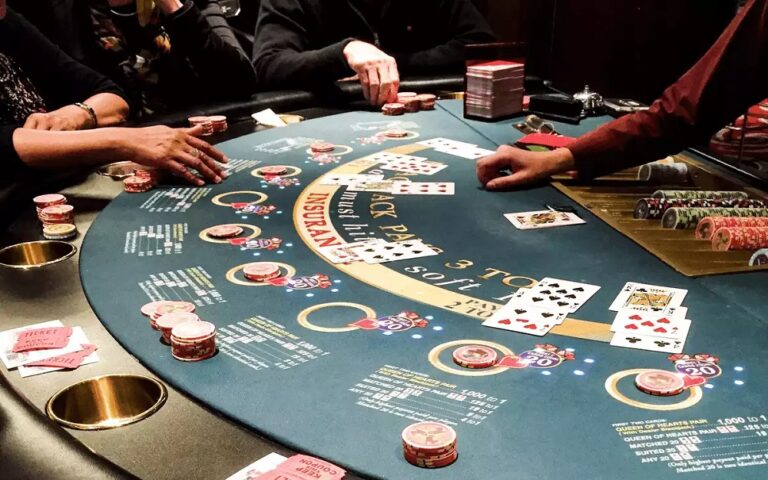
Blackjack has long held a premier position on casino floors worldwide, celebrated for offering some of the most player-friendly odds in gaming. The fundamental objective appears uniform across every table: beat the dealer’s point total without exceeding twenty-one. A player who masters basic strategy for standard American blackjack can confidently walk up to almost any felt table, read the dealer’s visible upcard, and execute mathematically sound decisions regarding hitting, standing, doubling, or splitting.
However, the world of modern casino gaming has developed far beyond standard shoe layouts. Both brick-and-mortar resorts and digital platforms feature an extensive catalog of blackjack variants, each introducing subtle alterations to classic rules, deck compositions, payout schedules, and player options. Some of these rule adjustments grant players incredible flexibility, such as swapping cards between active hands or doubling down after any number of hits.
Yet, the house never gives away an advantage without taking something back in return. For every player-friendly rule introduced, casinos implement counter-balancing rules that preserve or expand the house edge. Comparing these popular variants reveals how structural rule shifts transform optimal strategies, payout potentials, and table mathematics.

The Baseline: Classic American Blackjack

To appreciate how different variants diverge, one must first establish the operational mechanics of classic American blackjack, commonly encountered in Nevada cardrooms and domestic casinos.
In this standard configuration, the game uses between six and eight standard fifty-two-card decks dealt from an acrylic shoe:
  • The Hole Card and Dealer Peek: The dealer receives one face-up card and one face-down card, known as the hole card. If the dealer’s visible upcard is an ace or a ten-value card, the dealer immediately peeks at the hole card to check for a natural blackjack before players take any action. If the dealer has a blackjack, the round ends instantly, and players lose only their original wagers rather than losing supplementary split or double-down bets.
  • Doubling Down Privileges: Players typically have the option to double down on their original two-card hand regardless of its initial sum, receiving exactly one additional card in exchange for doubling their wager. Most venues permit doubling down after splitting identical pairs as well.
  • Standard Payouts: A winning hand pays even money (one-to-one), while a natural twenty-one formed by the initial two cards pays three-to-two, though players must remain alert for tables offering inferior six-to-five payouts.
  • Dealer Action on Soft Seventeen: Depending on the specific table guidelines, the dealer is instructed either to stand on all seventeens (both hard and soft) or to hit on soft seventeen (a total of seventeen containing an ace counted as eleven). Standing on soft seventeen reduces the house edge by roughly two-tenths of a percent.
When dealt from an eight-deck shoe with standard three-to-two payouts and player-friendly doubling rules, the house edge under basic strategy sits at roughly five-tenths of one percent.

European Blackjack: The No Hole Card Rule

European blackjack is the prevalent style across continental Europe, the United Kingdom, and many international international gaming destinations. While it looks very similar to the American version at a glance, one structural operational difference dramatically alters the mathematical risk of aggressive plays.
Under European rules, the dealer does not receive a second card until all seated players have completed all of their actions:
  • Absence of Dealer Peeking: Because the dealer has no hole card, they cannot peek for blackjack when showing an ace or a ten. The hand continues normally, with players making independent strategic choices.
  • Heightened Risk on Doubles and Splits: If a player chooses to split a pair of eights against an ace or double down on an eleven, and the dealer subsequently draws a natural twenty-one at the end of the round, the player loses all split and doubled wagers, not just the original ante bet.
  • Restricted Doubling Opportunities: European tables often restrict doubling down strictly to hard totals of nine, ten, or eleven, prohibiting soft doubles (such as doubling with an ace and a seven).
  • Fewer Decks in Circulation: European games frequently utilize fewer decks, often running two to four decks rather than six or eight. While fewer decks mathematically benefit the player, the strict no-hole-card policy offsets this advantage, typically leaving the baseline house edge around six-tenths to seven-tenths of a percent.
Because of the risk of losing compounded wagers to an unseen dealer blackjack, basic strategy for European blackjack requires a more defensive posture against dealer aces and tens compared to the American game.

Spanish 21: Eliminating Tens in Exchange for Player Perks

Spanish 21 is one of the most widely played and exciting variations of classic blackjack. It introduces a dramatic compositional shift: the game is played using forty-eight-card Spanish decks, which are created by physically stripping all natural ten-spot cards from standard fifty-two-card decks.
Removing natural tens is heavily unfavorable to players because high-value cards are essential for hitting blackjacks, completing successful double downs, and causing dealer busts. To offset this significant house advantage, Spanish 21 introduces an array of favorable player rules:
  • Player Blackjacks and Twenty-Ones Always Win: If a player achieves a natural blackjack or draws to twenty-one, the player automatically wins immediately at full payout odds, even if the dealer also holds a blackjack or twenty-one. Ties do not result in a push at twenty-one.
  • Late Surrender and Double Down Rescue: Players can surrender their hand after doubling down. If you double down on an eleven and receive a low card, you can forfeit your original bet and reclaim the doubled portion through the double-down rescue rule.
  • Unrestricted Doubling and Hitting After Splitting: Players can double down on any number of cards, not just the initial two-card holding. Aces can be re-split multiple times, and players can hit or double after splitting aces.
  • Bonus Payouts on Specific Hands: Drawing a five-card twenty-one pays three-to-two, a six-card twenty-one pays two-to-one, and a seven-card twenty-one pays three-to-one. Specialty combinations, such as three sevens of the same suit against a dealer upcard of seven, can trigger massive bonus payouts.
When played with full basic strategy designed specifically for Spanish 21, the house edge is surprisingly low, often dropping below four-tenths of a percent, making it mathematically superior to many standard blackjack tables.

Blackjack Switch: Trading Cards Between Active Hands

Invented in the early two thousands by Geoff Hall, Blackjack Switch introduced an interactive mechanic that was previously considered the ultimate form of cheating: allowing a player to physically swap cards between two separate hands.
The game requires players to place two equal-sized bets on two adjacent betting spots, receiving two separate two-card hands dealt face up:
  • The Card Switch Privilege: The player has the legal option to switch the second card dealt to each hand. For instance, if you are dealt an ace-five on hand one and a six-ten on hand two, you can switch the five and the ten. This transforms your holdings into a twenty-one (ace-ten) and an eleven (six-five), turning two mediocre positions into two power hands.
  • The Dealer Push on Twenty-Two Rule: To balance the massive statistical advantage of switching cards, the game introduces a distinct rule: if the dealer busts with a total of twenty-two, all active player hands (except natural, unswitched blackjacks) result in a push rather than a win.
  • Even Money on Blackjacks: Natural blackjacks pay even money (one-to-one) rather than the standard three-to-two, which further mitigates the player’s card-switching leverage.
  • Automatic Hits on Soft Hands: Dealers universally hit soft seventeen in Blackjack Switch, adding slightly more pressure to player outcomes.
Blackjack Switch demands a completely distinct, complex strategy matrix. Players must decide whether improving one hand justifies weakening the adjacent holding, all while keeping in mind that dealer twenty-twos will not award a victory.

Double Exposure: Complete Dealer Visibility

Double Exposure blackjack eliminates the mystery of the hole card entirely. In this variant, both of the dealer’s initial cards are dealt face up for every player to inspect before taking any action.
Seeing the dealer’s full hand eliminates all guesswork regarding dealer strength, removing the psychological anxiety of hitting into an unknown total. However, to maintain the casino edge against such total transparency, severe counter-balancing rules are applied:
  • The Dealer Wins All Ties: In standard blackjack, matching the dealer total results in a push, preserving the player stake. In Double Exposure, the dealer wins all ties on all hands, with the sole exception of a tied natural blackjack.
  • Even Money Payouts for Blackjacks: Natural blackjacks pay strictly even money, removing the traditional three-to-two bonus.
  • Restricted Doubling and Splitting: Doubling down is commonly restricted to hard nine, ten, or eleven totals, and splitting is often limited to a single occurrence with no doubling permitted after the split.
Losing every single tie is a massive mathematical penalty that costs players significantly over a long session. Consequently, even with both dealer cards fully visible, the baseline house edge on Double Exposure typically hovers between seven-tenths of a percent and one-and-a-half percent.

Pontoon: The British Cardroom Alternative

Pontoon is a traditional British variant that evolved along a parallel path to modern twenty-one. While it uses standard playing cards and aims for a total of twenty-one, the terminology and rule structures diverge considerably from American table designs:
  • Distinct Terminology: Hitting is called twisting, standing is called sticking, doubling down is known as buying, and a natural two-card twenty-one is titled a Pontoon.
  • Hidden Dealer Cards: Both of the dealer’s cards are dealt completely face down. Players receive zero preliminary visual information about the dealer hand strength until all player decisions have concluded.
  • The Power of the Five-Card Trick: Second only to a Pontoon in hand strength is a Five-Card Trick, which consists of drawing five cards without busting, regardless of the numerical total. A Five-Card Trick automatically beats any three-card or four-card hand totaling twenty-one and pays out at two-to-one.
  • Mandatory Hitting on Low Totals: Players cannot stick on weak hands; you are legally required to continue twisting until your total reaches at least fifteen.
  • Dealer Wins Ties: Similar to Double Exposure, the dealer wins all tied totals in Pontoon, providing the house with steady mathematical equity against the generous payouts on Five-Card Tricks.

Summary Comparison of Popular Blackjack Variants

Evaluating these variants side-by-side illustrates how casinos adjust underlying rules to balance player advantages:
  • Classic American: Features hole-card peeking and standard three-to-two blackjacks; balanced baseline strategy with a low house edge around 0.5%.
  • European Blackjack: Dealer takes no hole card until player actions conclude; higher risk when doubling and splitting against dealer aces and tens.
  • Spanish 21: Strips all natural tens from the shoe; compensates with player twenty-ones always winning, late surrender rescues, and multi-card bonuses.
  • Blackjack Switch: Permits switching second cards between two hands; counter-balanced by even-money blackjacks and dealer twenty-two pushing active hands.
  • Double Exposure: Both dealer cards dealt completely face up; counter-balanced by the dealer winning all tied hands and even-money blackjacks.
  • Pontoon: Features hidden dealer cards and five-card trick bonuses; mandates hitting until fifteen and awards all ties to the dealer.

Frequently Asked Questions

Why do six-to-five blackjack payout tables increase the house edge so dramatically?
A six-to-five payout reduces the return on a natural twenty-one from 150 percent of your wager down to 120 percent. On a ten-dollar bet, a three-to-two table pays fifteen dollars for a blackjack, whereas a six-to-five table pays only twelve dollars. Because a player naturally hits a blackjack roughly once every twenty-one hands, this seemingly small reduction in payout adds approximately 1.4 percent to the casino’s baseline house edge, effectively tripling the operator advantage compared to standard games.
Can a player use standard American basic strategy charts when playing Spanish 21?
No, applying standard American basic strategy charts to Spanish 21 will result in severe strategic errors. Because Spanish 21 decks contain no natural ten-spot cards, the probability of drawing a ten-value card drops from 30.8 percent down to roughly 27.7 percent. This altered math makes double downs less reliable and reduces the likelihood of dealer busts. Furthermore, Spanish 21 offers lucrative multi-card twenty-one bonuses, meaning you should frequently hit hands (such as hitting a soft seventeen or an eight-card hand) that you would stand on in standard blackjack.
What happens in Blackjack Switch if a player switches cards to make a natural twenty-one?
If a player swaps cards in Blackjack Switch to create a two-card total of twenty-one (an ace and a ten-value card), the resulting hand is classified as a standard twenty-one rather than a natural blackjack. Consequently, it does not pay the instant blackjack bonus, nor does it beat a dealer hand of twenty-one. It simply counts as an ordinary point total of twenty-one, and it will push if the dealer draws to a total of twenty-two.
Is it mathematically better to play a single-deck blackjack game with worse rules or a multi-deck game with great rules?
A multi-deck game with favorable player rules is almost always mathematically superior to a single-deck game with compromised rules. Casinos often advertise single-deck games to attract players, but then quietly introduce six-to-five blackjack payouts, ban doubling after splits, or force dealers to hit soft seventeen. A single-deck game paying six-to-five carries a house edge of roughly 1.45 percent, whereas an eight-deck game paying three-to-two with standard doubling rules has a house edge of only 0.5 percent.
Why does European blackjack require players to play more conservatively against dealer aces?
In European blackjack, the dealer does not take a hole card until all players have completed their turns, meaning the dealer cannot check for a natural blackjack upfront. If you split eights into two separate hands and double down on both, you have four times your original stake on the table. If the dealer then draws a natural blackjack, you forfeit all four units. In American blackjack, the dealer would have checked the hole card immediately, ending the hand and taking only your single initial wager before you could invest more chips.
How does the five-card trick in Pontoon alter the traditional strategy for hitting weak hands?
The five-card trick pays two-to-one and beats any standard non-Pontoon hand, creating a powerful incentive to draw cards on low totals. If a player holds four cards that total twelve or thirteen, standard blackjack strategy dictates standing against a weak dealer card to avoid busting. In Pontoon, however, drawing a small card to achieve a five-card total of fifteen or sixteen wins immediately with a two-to-one payout, prompting players to take calculated risks that would be considered mistakes at a standard table.