Archive

September 2026

Browsing
Popular culture often portrays poker as a game driven purely by intense staring contests, theatrical bluffs, and mysterious intuitive hunches. Cinematic representations encourage the idea that elite players achieve victory by looking deep into an opponent eyes to divine their hidden holding. While psychological observation and table demeanor certainly carry weight in physical cardrooms, treating poker primarily as an exercise in psychic intuition is a dependable recipe for financial ruin.
Beneath the physical chips, table talk, and dramatic showdowns, poker is a game of applied mathematics, probabilistic modeling, and risk management operating under conditions of incomplete information. The best players in the world do not rely on hopeful guesswork. They treat every hand as a series of quantitative problems, converting complex variables into logical decisions with measurable edges.
Understanding the mathematical frameworks governing card distribution, pot pricing, future expectations, and range balance transforms poker from a reckless gambling habit into a methodical discipline.

Foundations of Probability and Card Combinatorics

Every strategic poker decision begins with a standard fifty-two-card deck. Because the deck is fixed and finite, the exact likelihood of any physical card configuration can be calculated precisely. Understanding probability in poker prevents players from overestimating rare occurrences or underestimating routine statistical variance.
Combinatorics, or the science of counting hand combinations, forms the groundwork for modern range analysis:
  • Unpaired Hole Cards: Any two distinct ranks, such as ace-king, can be dealt in sixteen unique ways. Four of these combinations are suited (sharing the identical suit), while twelve combinations are offsuit.
  • Pocket Pairs: Any specific pocket pair, such as pocket queens, contains exactly six possible distinct combinations.
  • Blockers and Card Removal: Holding specific cards directly alters the probability of an opponent having certain combinations. For example, if you hold an ace in your own hand, the available combinations of pocket aces your opponent can hold drops from six down to three, and their possible ace-king combinations fall from sixteen down to twelve.
Rather than trying to put an opponent on one exact hand, skilled players use combinatorics to construct an entire range of potential hands, weighing which actions are most likely given the cards that have already been dealt.

The Relationship Between Outs and Pot Odds

One of the most practical mathematical tools used at the poker table is calculating pot odds and comparing them against hand equity. A player chasing a drawing hand—such as four cards to a flush or an open-ended straight draw—must determine whether the cost of calling a bet is justified by the probability of completing their hand.
The calculation breaks down into a dependable two-step sequence:
  • Counting Outs: An out is any unseen card remaining in the deck that will improve your holding to a probable winner. If you hold four suited cards on the flop, nine cards of that suit remain in the deck, giving you nine outs to complete a flush.
  • The Rule of Two and Four: To quickly convert outs into an approximate percentage at the table, multiply your outs by four with two cards to come (flop to river), or multiply by two with one card to come (turn to river). Nine outs multiplied by four yields an approximate thirty-six percent chance to hit your flush by the river.
  • Calculating Pot Odds: Pot odds express the ratio between the total size of the pot and the size of the bet you must call. If an opponent bets fifty dollars into a one-hundred-dollar pot, the total pot becomes one hundred and fifty dollars, and you must pay fifty dollars to call. Dividing your fifty-dollar call by the final two-hundred-dollar total pot reveals that you need twenty-five percent equity to break even.
Because your thirty-six percent probability of hitting the flush comfortably exceeds the twenty-five percent price offered by the pot, the call is mathematically justified. Repeating this positive mathematical transaction thousands of times guarantees a profitable outcome over the long run.

Expected Value: The Ultimate Decision Metric

Every action available in poker—folding, calling, checking, betting, or raising—carries an associated mathematical value. In professional game theory, this value is quantified as Expected Value, abbreviated as EV.
Expected Value represents the average theoretical financial return of an action if that exact scenario were repeated an infinite number of times under identical conditions:
  • Positive Expected Value (+EV): An action that yields a net financial gain over time. Even if you lose money on a single hand due to a bad river card, executing a positive expected value play remains correct.
  • Negative Expected Value (-EV): An action that bleeds chips over a large sample size. Making a mathematically unjustified call hoping for a lucky card is negative EV, even if the miracle card happens to fall on that specific occasion.
  • Neutral Expected Value (0 EV): Decisions that neither gain nor lose capital over the long run, often serving as mathematical indifference thresholds between folding and calling.
The formula for calculating Expected Value multiplies the probability of each potential outcome by its corresponding financial gain or loss, summing the results together. Long-term profitability in poker does not require winning every single pot; it requires consistently choosing the branch of the decision tree that carries the highest positive Expected Value.

Implied Odds and Reverse Implied Odds

Standard pot odds consider only the money currently sitting in the pot. In deep-stack games with future betting rounds remaining, players must also factor in implied odds: the additional money they expect to win from an opponent on later streets if their drawing hand hits.
Implied odds introduce crucial strategic dimensions:
  • Calculating Future Value: If a player calls a turn bet with insufficient direct pot odds to draw to a set, they may still justify the call if the opponent is committed to an overpair and will likely pay off a large river bet when the set completes.
  • Stack Depth Requirements: Implied odds are valid only if the effective stack sizes on the table are deep enough to pay out the necessary return. Chasing an improbable draw against an opponent who has only a few chips left behind is a mathematical error.
  • Reverse Implied Odds: The dark side of drawing hands. If completing your draw still leaves you vulnerable to a better holding—such as making an eight-high flush when an opponent holds a higher flush draw—you risk losing a massive pot when you hit your card. Reverse implied odds require players to fold weak, dominated draws even when the initial pot odds look enticing.
Evaluating future betting rounds mathematically prevents players from overpaying for draws that will not be compensated on showdown streets.

Game Theory Optimal and Minimum Defense Frequencies

Over the past decade, the integration of advanced computer software solvers has pushed poker strategy toward Game Theory Optimal (GTO) play. Rather than trying to exploit specific human mistakes, GTO concepts use mathematics to construct an unexploitable baseline strategy.
A cornerstone of defensive balance is the Minimum Defense Frequency (MDF):
  • The Formula for MDF: Minimum Defense Frequency dictates the exact percentage of your overall range that you must continue with (by calling or raising) to prevent an opponent from profitably bluffing you with any two random cards. It is calculated by dividing the pot size before the bet by the pot size after the bet is added.
  • Preventing Exploitation: If an opponent bets half the pot, the mathematical MDF requires you to defend at least 67 percent of your range. If you fold more than 33 percent of your hands in this scenario, an opponent can make an automatic profit by simply betting relentlessly with complete air.
  • Alpha and Bluff Sizing: The inverse of MDF is alpha, which informs a bettor how often their bluff must succeed to break even. A pot-sized bluff risks one unit to win one unit, requiring a fifty percent fold rate from the opponent to show an immediate profit.
Mastering these ratios ensures that a player never surrenders too much ground to aggressive betting patterns, establishing a mathematically sound defense across all streets.

Bet Sizing, Polarization, and Geometry

Mathematics determines not just when to bet, but the exact physical size of the chips pushed into the pot. Sizing bets is an exercise in geometric growth, designed to maximize value with premium hands or achieve maximum fold equity with bluffs.
Key sizing principles rely on concrete mathematical structures:
  • Geometric Sizing: Planning bets on the flop, turn, and river so that each bet is a consistent percentage of the pot, resulting in a clean all-in wager on the river. This maximizes the total amount of money extracted from an opponent second-best holding without making any single bet look outrageously disproportionate.
  • Polarized Value-to-Bluff Ratios: When a player bets large on the river with a polarized range (holding either the absolute nuts or an outright bluff), game theory mandates an exact ratio of value to bluffs. For a pot-sized river bet, the caller is offered two-to-one odds, meaning the bettor must mathematically include exactly two value hands for every one bluff hand to make the caller indifferent to calling or folding.
  • Condensed Range Sizing: When holding a merged, medium-strength range, smaller bet sizes (such as twenty-five to thirty-three percent of the pot) are mathematically optimal, allowing a player to extract thin value from weaker holdings while keeping their risk profile minimal.
Using arbitrary bet sizes based on momentary emotion disrupts the underlying geometry of the pot, allowing opponents to make easy, profitable calls or folds.

The Mathematics of Bankroll Preservation and Risk of Ruin

You can understand combinatorics, calculate pot odds flawlessly, and size bets like a computer, but without mathematical bankroll management, you will eventually go broke. The swings of variance in poker are severe, and absorbing those downswings requires adequate financial capitalization.
Bankroll mathematics centers on calculating the Risk of Ruin:
  • The Staking Standard: A cash-game player should typically maintain a minimum bankroll of thirty to fifty full buy-ins for their regular stake level. A tournament player, facing much higher variance due to massive field sizes, often requires one hundred to three hundred average buy-ins.
  • The Downside of Under-Capitalization: When a player participates in a game with too few buy-ins behind them, the statistical probability of hitting a normal downward cluster of hands and losing their entire bankroll approaches one hundred percent, regardless of their skill edge.
  • The Kelly Criterion: An advanced formula used in financial investing and sports betting that determines optimal wager sizes to maximize long-term logarithmic capital growth while mathematically eliminating the risk of total bankruptcy.
Treating your bankroll as an investment fund governed by capital-preservation rules ensures that negative variance never cuts your poker career short.

Frequently Asked Questions

Can someone become a winning poker player without memorizing complex mathematical formulas?
Yes, you do not need an advanced degree in mathematics or calculus to become a winning poker player. Most calculations performed at the table require basic arithmetic, multiplication, division, and basic percentage conversions. While elite professionals rely on complex solver data outside of game sessions, practical play relies on simplified mental shortcuts, like the Rule of Two and Four, to make accurate choices under time constraints.
How does variance impact a mathematically sound poker player over a short sample size?
Over a short sample size, such as a single session or a few hundred hands, variance completely overshadows mathematical edge. A terrible player making mathematically disastrous plays can easily leave the table with a massive profit due to pure luck, while a world-class player executing positive expected value decisions can lose multiple buy-ins. Only over large sample sizes—typically tens of thousands of hands—does the mathematics of edge assert itself over luck.
What is the practical difference between Game Theory Optimal play and exploitative poker strategy?
Game Theory Optimal play seeks to execute a perfectly balanced strategy that cannot be exploited by any counter-strategy, functioning as an unshakeable mathematical baseline. Exploitative strategy, by contrast, deliberately deviates from balance to maximize profit against specific, recurring human errors made by opponents. If an opponent folds to river bluffs ninety percent of the time, the exploitative play is to bluff with one hundred percent of your weak hands, abandoning mathematical GTO balance to extract maximum immediate profit.
Why is understanding fold equity critical when calculating the profitability of a bluff?
Fold equity represents the additional value gained from the probability that an opponent will fold their hand to a bet, surrendering the pot without reaching a showdown. When you execute a semi-bluff with a drawing hand, your total equity is the combination of your card equity (the chance your draw completes) plus your fold equity (the chance the opponent folds immediately). Factoring in fold equity mathematically transforms marginal or negative calls into highly profitable, positive expected value raises.
What does it mean when a decision is described as a breakeven percentage?
A breakeven percentage is the minimum rate of success required for a specific wager to produce an Expected Value of zero. For example, if you risk thirty dollars to win sixty dollars on a bluff, you are laying odds that require the bluff to work thirty divided by ninety, or 33.3 percent of the time. If you calculate that your opponent will fold forty percent of the time in that spot, the play has a positive expected value because the actual success rate exceeds the breakeven threshold.
How do modern poker solvers use artificial intelligence to solve mathematical equilibriums?
Poker solvers use iterative algorithmic calculations, primarily variants of Counterfactual Regret Minimization, to play billions of simulated hands against themselves. Starting from a state of total randomness, the solver tests every potential action across every possible board texture. Over millions of iterations, the software eliminates lines that lose value and reinforces lines that gain equity, eventually settling on a Nash Equilibrium where neither simulated player can improve their outcome by altering their strategy.
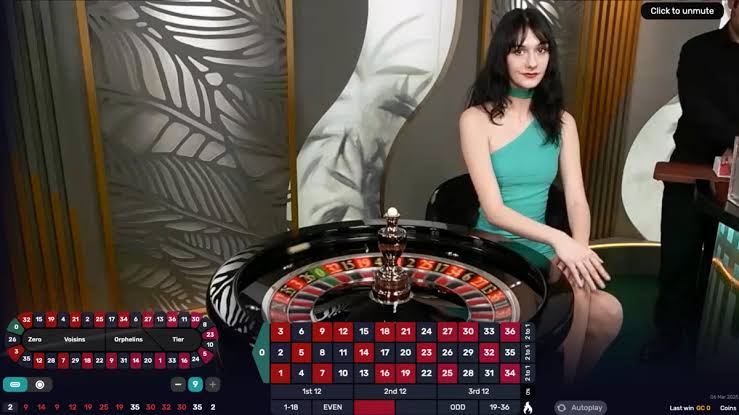
The foundation of modern casino gaming rests on the concept of chance. In a traditional land-based casino, randomness is produced through physical interactions governed by classical physics. A pair of tumbled dice bounces across textured felt, a white ivory ball loses velocity against the frets of a rotating roulette wheel, or an experienced dealer cuts and riffles a deck of paper cards. These physical motions introduce chaotic, unpredictable variables that prevent anyone from forecasting the next outcome with certainty.
In the virtual realm of online casinos, physical friction, atmospheric pressure, and manual shuffles do not exist. A computer program cannot physically shake dice or spin a wheel. Instead, digital platforms must replicate these chaotic physical events using advanced mathematical computations.
The mechanism responsible for producing these unpredictable outcomes in digital games is the Random Number Generator, widely referred to as an RNG. From slot machines and electronic blackjack to digital keno and virtual roulette, the RNG serves as the invisible engine driving every card dealt, wheel spun, and symbol dropped. Understanding how this technology operates demystifies online gambling, clarifies how fairness is maintained, and dispels common misconceptions about digital games.

The Core Concept: True Randomness Versus Pseudo-Randomness

To understand how online casino games operate, one must distinguish between two distinct forms of computational randomness: True Random Number Generators (TRNGs) and Pseudo-Random Number Generators (PRNGs).
  • True Random Number Generators: These hardware-driven devices extract entropy from unpredictable physical events occurring outside the computer system. Examples include measuring atmospheric noise, thermal fluctuations in semiconductor diodes, radioactive decay, or quantum mechanical phenomena. Because these sources are rooted in microscopic physical unpredictability, the numbers generated are fundamentally impossible to predict mathematically. While some specialized security systems and live-studio hybrid platforms utilize physical entropy collectors, pure hardware TRNGs are computationally intensive and slower to process for high-speed gaming.
  • Pseudo-Random Number Generators: PRNGs are software-based algorithms that use mathematical formulas to produce long sequences of numbers that mimic genuine randomness. While technically deterministic—meaning that if someone knew the exact formula and starting data point, they could theoretically predict the output—a modern cryptographic PRNG generates billions of values with statistical properties indistinguishable from true physical randomness. Because PRNGs are lightweight, exceptionally fast, and mathematically consistent, they serve as the primary engine for virtual online casino games.
Online gaming platforms rely on advanced, mathematically verified PRNG algorithms that produce sequences so extensive that no human or predictive computer model can detect a discernible pattern.

The Inner Mechanics: Seeds, Algorithms, and Cycles

A software-based Random Number Generator does not pluck numbers out of thin air. It processes initial data points through an intricate mathematical transformation pipeline to produce its final result.
The operational lifecycle of an online casino RNG centers on three key components:
  • The Seed Value: Every PRNG requires a starting number to initiate its mathematical calculations, known as the seed. If a generator used the exact same seed every time it started, it would produce the exact same sequence of numbers. To guarantee unpredictable results, modern gaming software sources its seeds from dynamic, constantly shifting environmental metrics. Common seed sources include the computer system clock measured down to the nanosecond, processor clock cycles, system memory states, or hard-drive read-write timings.
  • The Mathematical Algorithm: Once the seed is entered, the algorithm performs repeated, non-linear mathematical operations on the value. Widely utilized algorithms in gaming and cryptography include the Mersenne Twister, Linear Congruential Generators with extended parameters, and advanced cryptographic ciphers like AES-based counter modes. These formulas mix and shuffle numerical bits so thoroughly that any mathematical correlation between the original input seed and the generated output is completely erased.
  • The Period Length: Every PRNG eventually loops back to its starting point after generating a certain volume of numbers, an interval known as the cycle or period. High-grade gaming algorithms feature astronomical period lengths. For example, the Mersenne Twister possesses a period length of two raised to the power of 19,937 minus one. This number is so astronomically vast that a computer could generate billions of results every second for billions of years without ever repeating the sequence.

From Abstract Integers to Game Visuals

A common misconception among players is that a slot machine RNG decides whether a spin is a win or a loss based on player account balances or past gameplay history. In reality, the RNG has zero awareness of winning, losing, money, or game rules. The RNG simply outputs massive, multi-digit integers.
The conversion of raw integers into recognizable game events follows a strict translation protocol:
  • Continuous Operation: The RNG algorithm runs continuously in the background, churning out hundreds or thousands of raw numbers every single millisecond, even when no one is actively playing the game.
  • The Execution Command: The precise microsecond a player clicks the spin, deal, or bet button on their screen, the game software captures the current batch of integers generated by the RNG at that exact moment. Any delay of even a millisecond would produce a completely different set of numbers.
  • Mathematical Scaling and Mapping: The game software receives these raw numbers and scales them down using modulo arithmetic to fit the parameters of the specific game. For instance, in a standard fifty-two-card virtual deck, the system scales the random values into integers from one to fifty-two, assigning each number to a specific card suit and rank.
  • Reel Position Translation: In an online video slot, the system maps the random numbers directly to physical stop positions on virtual reels. If a slot reel features fifty individual stop positions, the algorithm divides the integer to select a specific stop coordinate between one and fifty.
  • Graphical Representation: Once the server determines the final stopping coordinates, it transmits those coordinates back to the player device. The visual animations—the spinning reels, bouncing dice, or turning cards—are purely graphical representations designed for entertainment. The mathematical outcome of the bet was finalized milliseconds after the player pressed the button.

The Illusion of Machine Memory and Player Streaks

Because humans are hardwired to identify patterns, players frequently develop superstitious beliefs regarding how online games behave. These cognitive biases run entirely counter to the mathematical mechanics of random number generation.
An authentic RNG operates with complete independence between events:
  • The Fallacy of Cold and Hot Cycles: Players often believe that a slot game that has not paid out in hours is due for a massive jackpot, or that a roulette table that showed black five times in a row must land on red next. In an RNG system, past events exert zero influence on future outcomes. Every single spin or deal is an isolated, independent event that operates on identical mathematical probabilities.
  • The Reality of Near Misses: Seeing two jackpot symbols line up on a payline with the third symbol resting just above the line can feel like the machine almost paid out. In reality, this visual arrangement is simply the graphical display of a specific numerical coordinate chosen by the RNG. The algorithm does not know what almost winning looks like; it simply displayed the exact outcome dictated by the integer captured at that fraction of a second.
  • Stakes and Balances Do Not Affect Math: A certified RNG has no connection to a player account history, total deposits, recent withdrawals, or current bet size. The generator produces numbers along the same probability distribution whether a player wagers ten cents or five hundred dollars.

Testing, Certification, and Regulatory Compliance

An online casino cannot simply design its own software algorithm and ask players to trust that it is fair. Operating a legal, licensed gaming site requires rigorous, independent verification from accredited third-party testing facilities.
Before an online casino game is approved for public distribution, it must undergo thorough technical auditing:
  • Accredited Independent Laboratories: Organizations such as eCOGRA, Gaming Laboratories International, BMM Testlabs, and iTech Labs evaluate game software. These entities operate as independent testing bodies authorized by state and international gaming commissions.
  • Statistical Randomness Testing: Auditors run millions of automated software simulations on the game code, applying advanced statistical test batteries such as the Diehard tests and NIST statistical benchmarks. These tests analyze the output sequences for subtle biases, unexpected digit clustering, or structural predictability.
  • Return to Player Validation: Testers confirm that the theoretical Return to Player (RTP) calculated from the software math model matches the actual payout percentage generated over large sample sizes.
  • Tamper-Evident Source Code Hashing: Once an algorithm and game math configuration pass inspection, auditors generate a unique cryptographic hash of the compiled code. Regulated casino servers are regularly inspected to verify that this digital fingerprint remains unchanged, ensuring that operators cannot alter the underlying game math after approval.
Operating without these certifications is a direct violation of regulatory standards, resulting in the immediate suspension or revocation of an operator gaming license.

Player Protections in Regulated Environments

The integration of certified RNG systems provides players with structural protections that make regulated digital gaming safe and predictable.
Licensed platforms deliver several practical assurances:
  • Separation of Casino and Developer: In modern online gambling, the casino website does not host the game math on its own private servers. Games are streamed directly from the remote servers of certified software providers like NetEnt, Pragmatic Play, or Evolution. The casino operator has zero direct access to modify the RNG or adjust payout tables on the backend.
  • Audited Payout Reports: Top-tier licensed operators publish monthly payout verification reports directly on their websites. These public certificates display the actual, audited payout percentages across all game categories, confirming that the games are paying out in accordance with their theoretical design.
  • Legal Recourse and Transparency: When a player wagers on a certified, regulated platform, every single transaction is logged on secure remote databases with unique transaction identification numbers. If a technical dispute occurs, regulatory control boards can pull the exact server logs and examine the RNG seed, captured integer, and final settlement to provide an objective resolution.
Certified Random Number Generators transform complex lines of computational code into an equitable, trustworthy gaming environment where every player receives a genuinely fair chance at an honest outcome.

Frequently Asked Questions

Can an online casino manipulate the RNG to force a player to lose?
No, an online casino operating under a legitimate regulatory license cannot manipulate the RNG. Regulated casinos do not run game logic on their own internal computers; the software is hosted securely on the remote servers of licensed game developers. Furthermore, independent testing agencies regularly audit the code to ensure the software remains uncompromised. Any attempt to modify game math would break the regulatory code hash and trigger an immediate investigation, massive fines, and license revocation.
What is the difference between a high-volatility RNG game and a low-volatility RNG game?
The difference lies not in the fairness of the RNG, but in how the game software math model distributes winning payouts. In a low-volatility game, the algorithm is configured to award frequent payouts of smaller monetary value, resulting in a steady, lower-risk gaming session. In a high-volatility game, the RNG delivers longer stretches of non-paying outcomes balanced by the mathematical possibility of much larger payouts when a winning combination occurs. Both formats utilize the exact same standard of randomness.
Does increasing your bet size change the way an RNG selects numbers?
No, increasing or decreasing your bet size has zero impact on the RNG algorithm. The generator continually outputs raw integers along identical statistical distributions regardless of whether you place a minimum wager or the maximum allowable bet. The only difference is that the payout table will multiply your winnings by the larger stake if a winning coordinate is selected.
Why do some games display different Return to Player percentages across different casinos?
Modern software providers frequently offer certified games with variable Return to Player ranges. This allows a licensed casino operator to select from several pre-approved mathematical settings (such as 96 percent, 94 percent, or 92 percent) to suit regional tax structures and business models. However, once an operator selects an approved RTP profile, that setting remains static and cannot be changed on the fly during a player session. Players can verify the active RTP of any game by opening the help or rules menu inside the game window.
Can an RNG malfunction or generate an error during an active game?
Yes, software or hardware errors can occasionally occur, typically caused by internet connection dropouts, server communication timeouts, or client-side display freezes. When a connection drops during a round, the server-side RNG has usually already determined the outcome the microsecond the bet was initiated. Once the player re-establishes a connection or logs back in, the game software retrieves the stored server result, settles the balance, and updates the account history accurately. Standard industry terms universally state that technical malfunctions void all pays and plays if a true system failure prevents the server from validating the round.
How does a provably fair cryptographic game differ from a standard RNG game?
A standard online casino RNG relies on third-party institutional audits to confirm fairness, meaning players trust the certifications of testing laboratories like eCOGRA. Provably fair games, commonly found on blockchain-based platforms, use public cryptographic hashing algorithms (like SHA-256) that allow individual players to manually verify the authenticity of every single round. Players can compare the encrypted server seed, client seed, and transaction nonce using public calculators to prove mathematically that the outcome was predetermined fairly and unmanipulated by the platform.